
Grades 6–8 · Ages 11–13
Art Foundations
A ten-week graphite drawing workshop. One pencil, ten Mondays, and the biggest jump in drawing skill a middle schooler can make — because the lessons are about how your brain sees, not just how your hand moves.
Enroll now See all four classes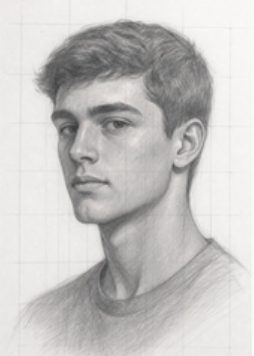
A graphite study with proportion grid — exactly how this workshop teaches seeing.
Fall launch special — drop in any Monday for $30.
No commitment · Launch drop-in rate for Fall 2026 · Oct 5 – Dec 14 · no class Thanksgiving week
When
Mondays, 12:30–2:00 PM
Length
90 minutes
Fall launch drop-in
$30
Full 10 weeks
$350
Fall launch drop-in is $30 per class (standard rate $35) — no commitment, any Monday. First class is $15, so you can try it before committing. $20 off for each additional sibling. Classes are held at my home studio in Holladay — I send the address when you enroll.
Week by week
Ten Mondays, one pencil.
Ten Mondays, October 5 through December 14, and all of it graphite. Weeks one through six each stand on their own — a drill or study that finishes in one session, so dropping in works any week. The last four weeks belong to one sustained drawing, so the workshop is best started at the beginning — ask me about joining mid-term.
Utah Core Standards covered this semester · Visual Arts, Grades 6–8
- 6.V.CR.3Demonstrate openness in trying new ideas, materials, methods, and approaches in making works of art and design.
- 6.V.CO.2Relate artistic ideas and works with societal, cultural, and historical context to deepen understanding by analyzing how art reflects changing times, traditions, resources, and cultural uses.
- 6.V.R.4Interpret art by distinguishing relevant contextual information, and by analyzing subject matter, characteristics of form and structure, and use of media to identify ideas and mood conveyed.
- 7–8.V.CR.5Demonstrate persistence in developing skills with various materials, methods, and approaches in creating works of art or design.
- 7–8.V.CR.6Demonstrate willingness to experiment, innovate, and take risks to pursue ideas, forms, and meanings that emerge in the process of art-making or designing.
- 7–8.V.CO.3Analyze how response to art is influenced by understanding the time and place in which it was created, the available resources, and cultural uses.
Standard text is quoted from the Utah State Board of Education Fine Arts Core Standards. Emily Engh Art Studio is an independent studio, not a public school — these are the standards the semester is built to cover.
Week 1 · Oct 5
Drill
Your Brain Draws Shortcuts
Why drawings come out 'wrong': your brain stores objects as symbols, not shapes. A day-one diagnostic drawing — we keep it for the last week.
Week 2 · Oct 12
Drill
Turn It Upside Down
The classic trick that actually works. Flip the reference and the symbols stop firing — suddenly you're drawing what's really there.
Week 3 · Oct 19
Drill
Make Your Hand Follow Your Eye
Slow contour drawing, the pencil moving only while the eye moves. The connection everything else this term is built on.
Week 4 · Oct 26
Study
Objects in the Same Space
Two objects that share a page instead of floating on it. Relative size and placement, measured against each other.
Week 5 · Nov 2
Study
Bigger Than Life
A small object on a big sheet of paper. Scaling up with the pencil as a measuring tool, so the proportions survive the jump.
Week 6 · Nov 9
Study
Every Line Has a Job
Line hierarchy: dark, light, crisp, soft. Which edges carry the drawing, and which ones it can live without.
Week 7 · Nov 16
The Big Piece
What Do You Carry?
The sustained drawing begins. Each student picks three personal objects that say something about who they are, and starts the piece.
Week 8 · Nov 30
The Big Piece
Choose the Strongest View
Thumbnails first. Finding the angle and arrangement that makes the objects matter, before committing to the final layout.
Week 9 · Dec 7
The Big Piece
Make the Words Belong
The artist statement, drafted while the piece is still on the board. Writing about the work is part of making it.
Week 10 · Dec 14
The Big Piece
Finish and See the Change
Final passes, group critique, and the payoff: this drawing beside your week-one diagnostic. Same hand, different artist.
Fall 2026 workshop
October 5 to December 14.
Ten Mondays of graphite. The fall workshop is about learning to see like an artist — naming how the eye actually works, then training the hand to keep up.
Every week opens with the real reason the skill exists — "your brain draws shortcuts" before a single shading exercise — and a working artist most people have never heard of, whose drawing shows the lesson in action.
What we cover
The ground this class covers.
Your brain edits what you look at before you ever pick up a pencil. Drawing is learning to catch it in the act.
Edges with weight and hierarchy — which lines carry the form and which are just habits.
Paper has no edges, only darkness. Light and shadow that build form instead of decorating it.
Measuring with the pencil — objects that fit the page and each other.
Where things sit on the page, and why that's most of the decision.
Saying what you see in a drawing, out loud, and hearing it about yours.
How a class runs
What a Monday looks like.
- Graphite all term. The skill is seeing, not supply management — and it transfers to every medium that comes after.
- Each week opens with the why: the real reason the skill exists, named before the pencil moves.
- Four or five real vocabulary words a week, used out loud until they stick.
- Work stays at the studio or goes home — the student's choice in this tier.
- The last four weeks run on one sustained drawing, first thumbnail to finished piece.
Most kids arrive drawing from memory — symbols for eyes, symbols for hands. The first month is about catching the brain doing that. It's uncomfortable for about two weeks, and then it's the most empowering thing that's ever happened to their drawing.
I tell students what we're learning at the start of class, then reveal the steps one at a time as we go. It keeps everyone moving together and leaves room for the lesson to bend around the group in front of me.
Coming back next year
No repeats.
The curriculum runs on a three-year rotation, and every tier is a three-grade band. A student can stay in Art Foundations for all three years and never repeat a project. When they age up into the next class, the ideas come back — but at a depth they couldn't have handled before.
From the classroom
What graphite can do.
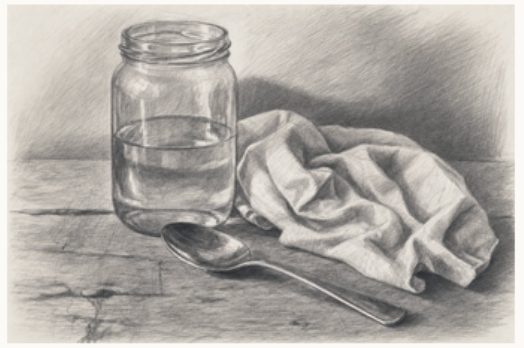
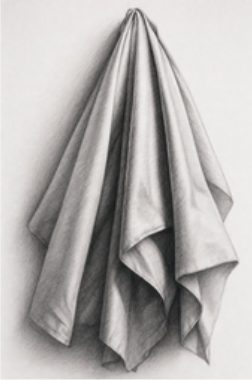
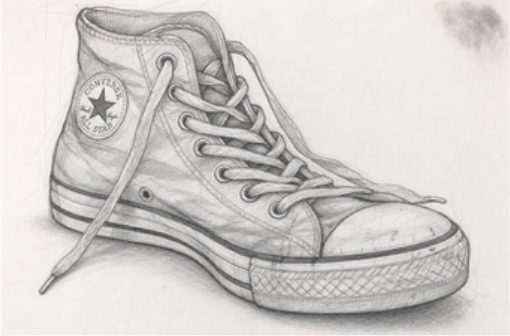
Student and demonstration studies — the exact skills this workshop trains.
Enroll
Come try one class first.
Drop in any Monday this fall for $30 — or try the first class for $15. Tell me your child's grade and I'll send the studio address, the supply notes, and confirm your spot.
Enroll now Back to all classes