
Grades 9–12 · Ages 14–18
Teen Studio
Two sustained portfolio drawings, taken from first thumbnail to final critique. Real technique, real critique, and a documented record homeschool families can actually use.
Enroll now See all four classes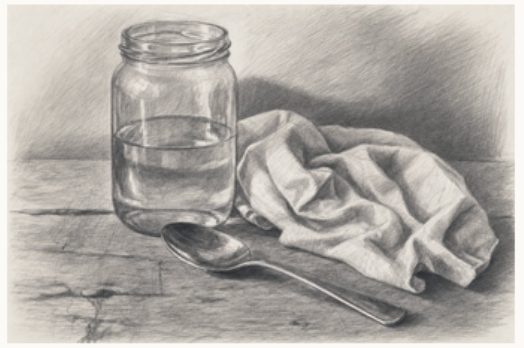
A graphite still life — glass, metal, fabric: the materials this class takes on.
Fall launch special — drop in any Monday for $35.
No commitment · Launch drop-in rate for Fall 2026 · Oct 5 – Dec 14 · no class Thanksgiving week
When
Mondays, 2:30–4:15 PM
Length
105 minutes
Fall launch drop-in
$35
Full 10 weeks
$380
Fall launch drop-in is $35 per class (standard rate $38) — no commitment, any Monday. First class is $20, so you can try it before committing. $20 off for each additional sibling. Classes are held at my home studio in Holladay — I send the address when you enroll.
Week by week
Two portfolio pieces, ten Mondays.
Ten Mondays, October 5 through December 14. Three weeks of technique, then two sustained portfolio drawings — each one built, critiqued, revised, and finished to a standard a portfolio can rest on. Because the pieces span several weeks, this class is best started at the beginning — ask me about joining mid-term.
Utah Core Standards covered this semester · Secondary Visual Arts, Level 1
- L1.V.CR.1Use multiple approaches to begin creative endeavors.
- L1.V.CR.6Apply relevant criteria from traditional and contemporary cultural contexts to examine, reflect on, and plan revisions for works of art and design in progress.
- L1.V.P.1Analyze, select, and curate artifacts and/or artworks for presentation and preservation.
- L1.V.R.3Interpret an artwork or collection of works, supported by relevant and sufficient evidence found in the work and its various contexts.
- L1.V.R.4Establish relevant criteria in order to evaluate a work of art or collection of works.
- L1.V.CO.1Document the process of developing ideas from early stages to fully elaborated ideas.
Standard text is quoted from the Utah State Board of Education Fine Arts Core Standards. Emily Engh Art Studio is an independent studio, not a public school — these are the standards the semester is built to cover.
Weeks 1–3
October 5 – 19
Technique
Find out where your drawing actually is
A drawing-from-life diagnostic the first Monday — kept on file, not graded — then comparative measurement and pencil-measuring technique, then composition and visual hierarchy: thumbnails before a single committed mark. The diagnostic comes back out in week ten.
Goes home: measurement studies and three thumbnails — the diagnostic stays in the studio until the last week
Weeks 4–6
October 26 – November 9
Portfolio Piece One
Things We Carry
The first sustained drawing: a still life of personal objects, chosen by the student. Line hierarchy and surface in week five, then critique, revision, and completion in week six — the piece comes off the board finished, with its artist statement.
Goes home: one finished portfolio drawing and a written artist statement
Weeks 7–9
November 16 – December 7
Portfolio Piece Two
The complex still life
The second sustained drawing raises the difficulty: value structure and lighting, a complex graphite still life, then edges, depth, and focal control. More objects, more decisions, same standard.
Goes home: a second finished portfolio drawing and artist statement
Week 10
December 14
Review
Final critique and portfolio review
Both pieces on the wall, the week-one diagnostic beside them. Group critique, written statements, and a clear read on what to make next — this term is one chapter of a four-year body of work.
Goes home: both portfolio pieces, both statements, and the diagnostic for comparison
Fall 2026 workshop
October 5 to December 14.
Ten Mondays of graphite. The fall workshop builds two sustained portfolio drawings — and the habits that make the next ones better: measuring before marking, thumbnails before committing, critique before pride.
Every week opens with the real reason the skill exists, named before the pencil moves, and a working artist most people have never heard of whose work shows the lesson in action.
What we cover
The ground this class covers.
Comparative measurement and pencil technique — proportion you can defend.
Visual hierarchy and thumbnails before a single committed mark.
Line hierarchy and surface — what each edge is doing, and whether it should be.
Value structure, lighting, edges, depth, and focal control.
Specific, useful, weekly — and you learn to give it as well as take it.
Statements, journal, hours log — the record that makes the work usable.
How a class runs
What a Monday looks like.
- Two sustained portfolio drawings across the term — built, critiqued, revised, finished.
- Real critique — specific, useful, and not just encouragement.
- Four or five vocabulary words a week, threaded through demo and discussion.
- Small group. Nobody disappears in the back of this room.
- Not an AP track. No summer work, no multi-month sustained investigation.
Class starts at 2:30 on purpose. Utah high schools release at 2:10 on Mondays, so this works as an after-school class — homeschool and traditional high school students are both in the room.
I tell students what we're learning at the start of class, then reveal the steps one at a time as we go. It keeps everyone moving together and leaves room for the lesson to bend around the group in front of me.
For homeschool families
The Credit Track.
Teen Studio produces a documented record for grades 9–12: a visual journal with a page a week, retained sketches, an artist statement for every finished piece, and an hours log — transcript-ready, built from real work.
Four terms, including the eight-week summer session, total roughly 114 documented hours — about a full high school fine arts credit. Drop-in visits are welcome, but only term students build the record.
Twelfth graders can add the Senior Portfolio Track — choosing which pieces belong in a college application portfolio, and writing about them. Ask me and I'll tell you whether your student needs it — plenty don't.
From the classroom
Work at this level.
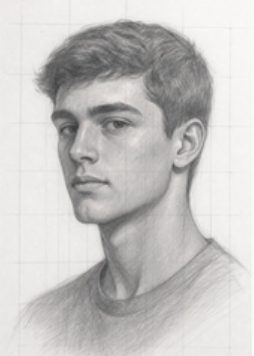
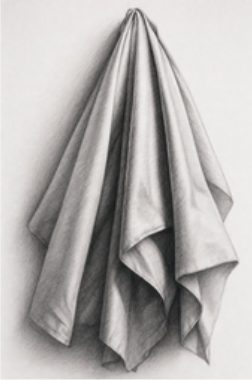
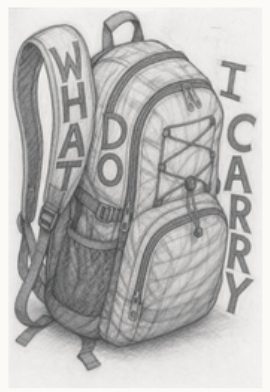
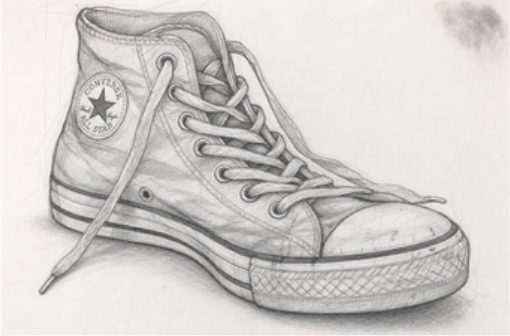
Student and demonstration studies — the materials this class takes on.
Coming back next year
No repeats.
The curriculum runs on a three-year rotation, and Teen Studio spans four grades. A student can stay for all four years and never repeat a project. The ideas from earlier classes come back here — but at a depth they couldn't have handled before.
Enroll
Come try one class first.
Drop in any Monday this fall for $35 — or try the first class for $20. Tell me your child's grade and I'll send the studio address, the supply notes, and confirm your spot.
Enroll now Back to all classes